


The Technology
AI That Learns From the Field
Most autonomous equipment follows a predefined map, but Oso’s equipment thinks on the fly.
How it works
The AI brain built for the physical world
Our Large World Model (LWM) is an AI system built from the ground up for outdoor environments. It learns from experience, adapts to new conditions, and gets smarter with every hour it operates. No rigid programming. No starting over on a new property.
So what exactly is it? You’ve probably heard of large language models (LLM) — the AI behind tools like ChatGPT. Those systems are trained to predict the next word in a sentence. Our LWM is trained to predict the next action in the physical world.
That distinction matters. Our equipment can observe its environment, make decisions in real time, and navigate complex outdoor spaces — uneven terrain, obstacles, irregular property boundaries — the same way an experienced operator would. Except it never gets tired, never calls out sick, and gets better the more it works.
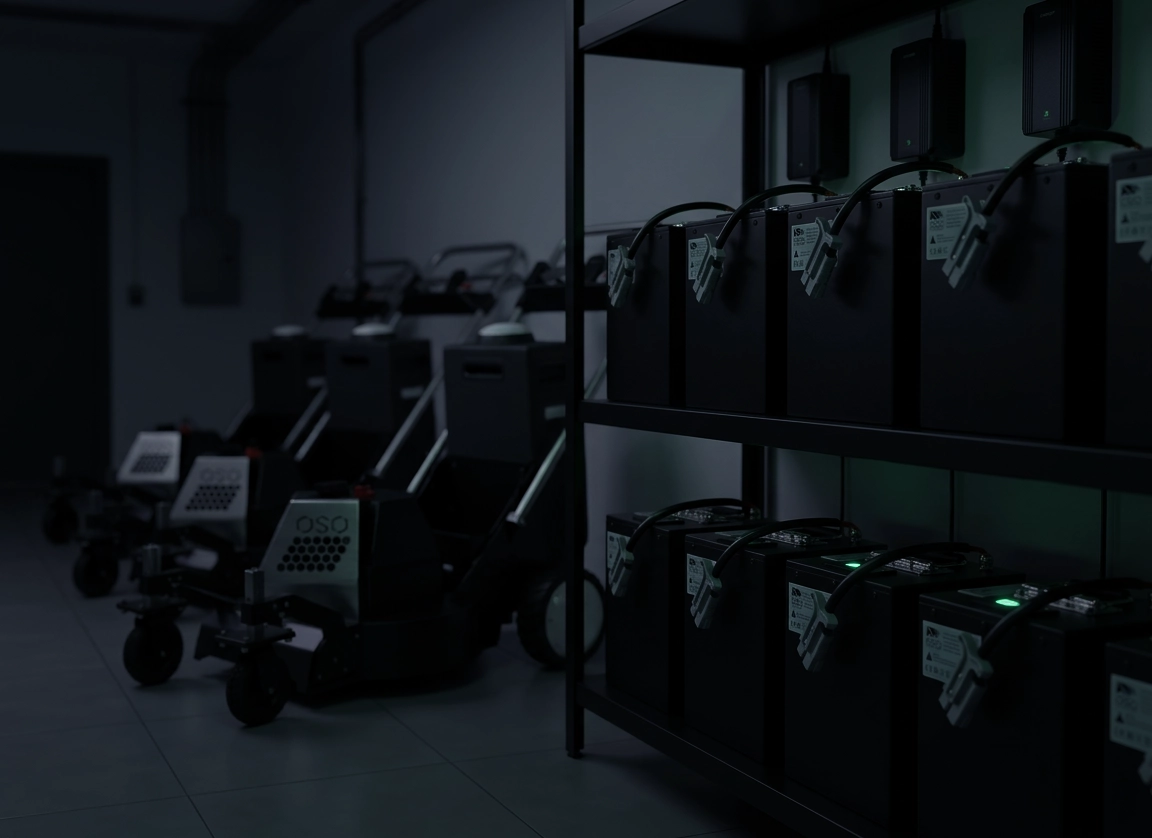
The hardware that makes it possible: RTK GPS for centimeter-level positioning, LiDAR for real-time obstacle detection, and vision cameras for person and object recognition. All data is processed by an on-board computer making navigation decisions continuously throughout every cut.
Setup
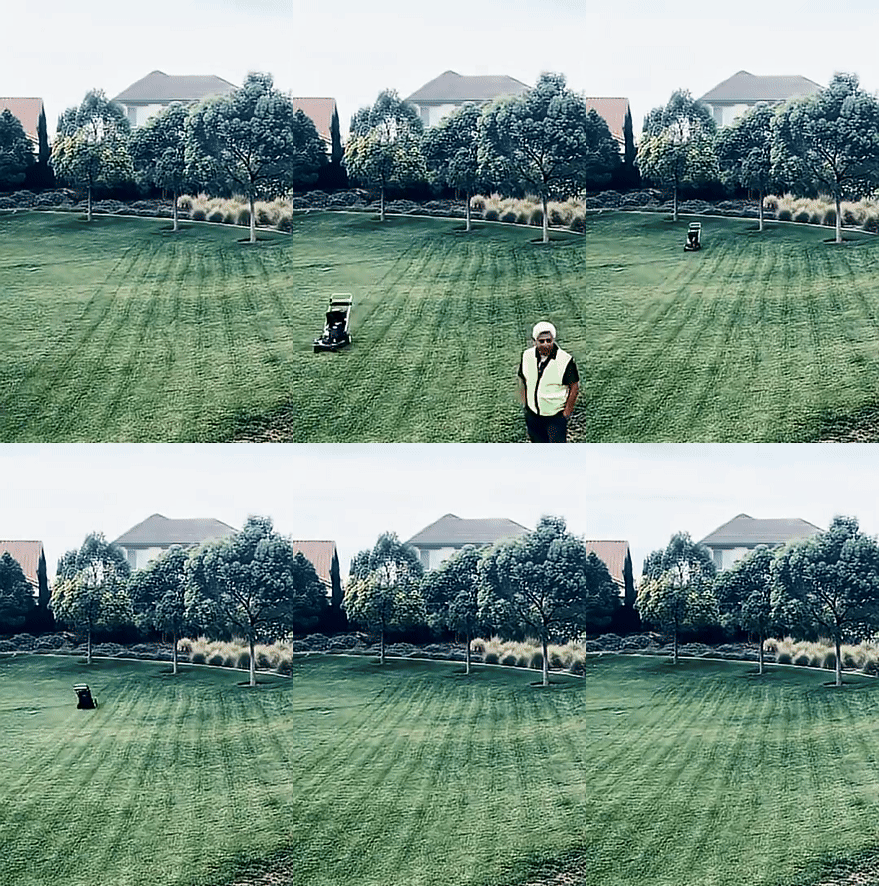
Operator walks perimeter
Record Mode active
GPS + sensor data captured
Boundary locked in
Mower operates autonomously
Within boundary
Continuous Learning
01
Mower cuts the site
Real-world operation
02
Operational data collected
Every run, every property
04
Every unit benefits
Updates deploy fleet-wide
03
LWM model improves
Across entire fleet
Equipment sold today performs better six months from now.No hardware change required — the intelligence lives in the software.
What it means
Less setup, more uptime. Lower cost per cut.
Simple site setup, then full autonomy — Getting a new property ready takes one walk. Operators trace the perimeter in Record Mode, which uses RTK GPS to lock in the site boundary with centimeter-level accuracy. That boundary is stored on the mower. From that point forward, every visit to that property starts with full autonomous operation — no reprogramming, no technician, no babysitting.
Adapts to what it finds — LiDAR sensors stop the mower immediately when anything enters its safety field. Vision cameras handle person and obstacle detection throughout the cut. The mower doesn’t need the property to be perfect, it handles what it finds.
Continuously improving — Every hour of operation feeds back into the model. Equipment sold today performs better six months from now. No hardware change required. The intelligence lives in the software.
Reduced dependency on skilled labor — The AI handles navigation and decision-making. Operators don’t need technical training to run it. If they can walk a perimeter, they can set up the mower.
In-Depth Look
How the Large World Model Works
Traditional autonomous outdoor equipment relies on one or more of the following: GPS boundary mapping, LiDAR or sensor-based obstacle avoidance, and hard-coded rule sets that define how the machine should behave in any given scenario. These systems are expensive to set up, brittle when conditions change, and incapable of handling situations they weren’t explicitly programmed for.
The LWM takes a fundamentally different approach. Rather than programming rules, we train a deep learning model on real-world operational data. This teaches it to interpret its environment and select the best action at each moment, the same way a human brain processes sensory input and makes decisions.
The sensor suite feeding the LWM is purpose-built for outdoor autonomy:
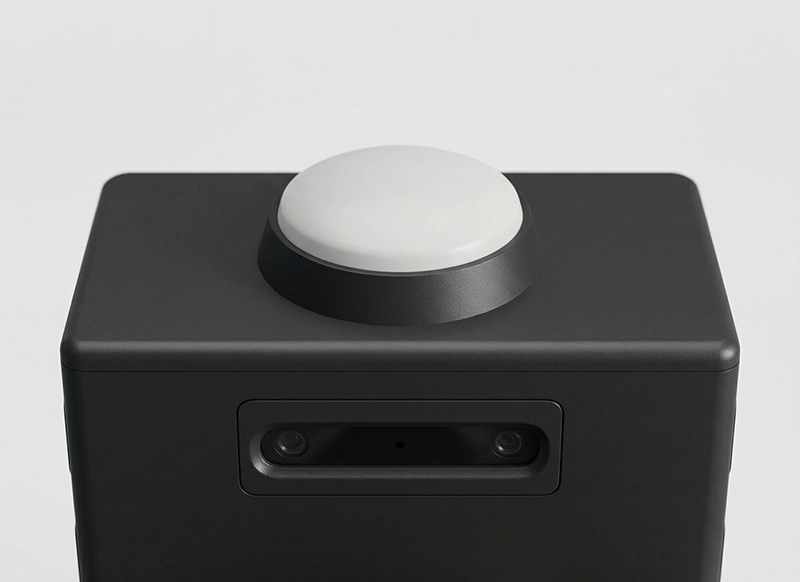
RTK GPS
Real-Time Kinematic positioning delivers centimeter-level accuracy, enabling precise boundary enforcement and consistent mowing patterns across every visit.
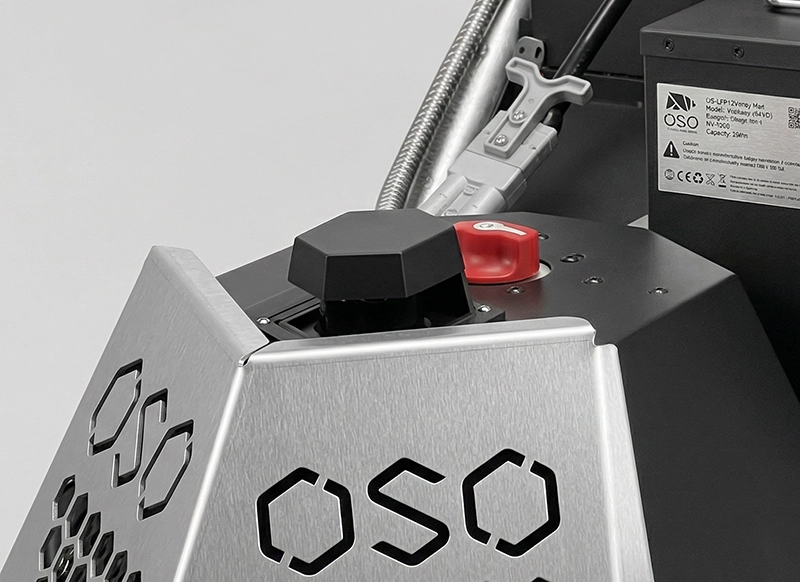
LiDAR
Continuous scanning of the safety field directly in front of and beside the mower, with immediate motor stop if anything enters the unsafe zone.
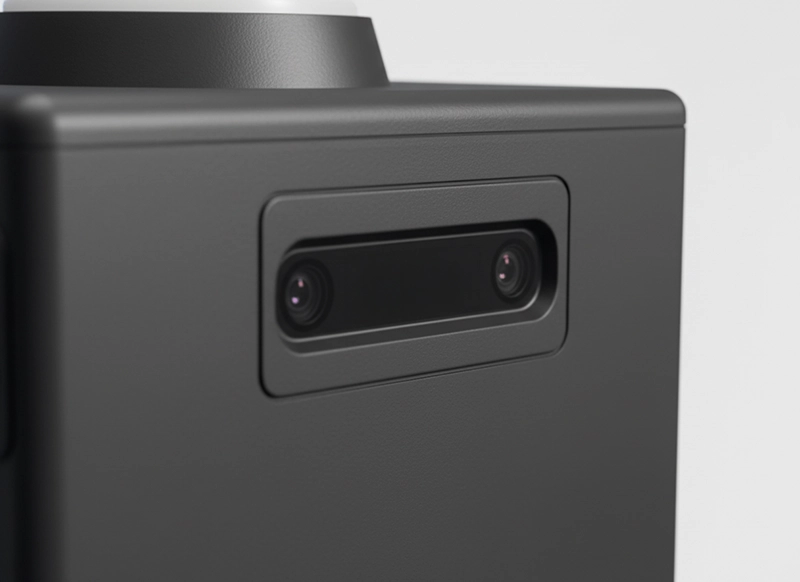
Vision cameras
Active obstacle and person detection throughout autonomous operation, providing a layer of awareness that GPS and LiDAR alone can’t deliver.
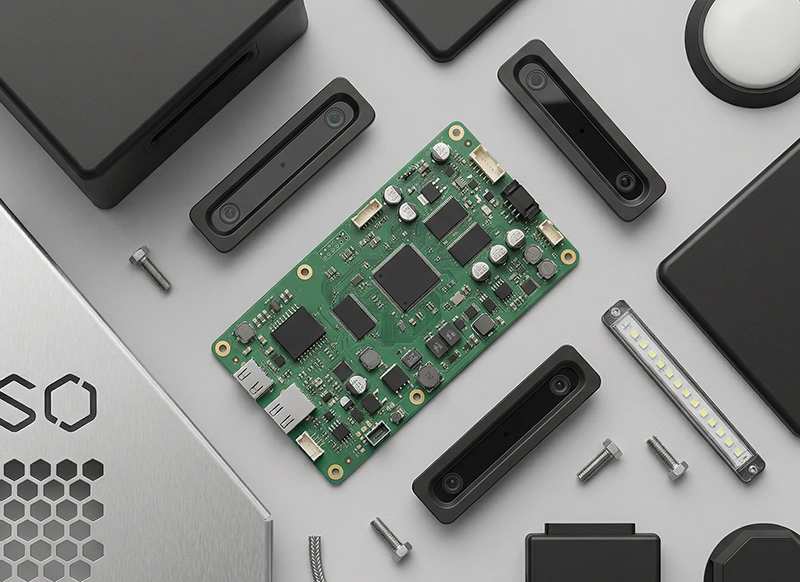
On-board computer
Fuses all sensor inputs in real time, making navigation and safety decisions continuously throughout every cut.
The result is an algorithm that:
- Generalizes to new environments without prior site-specific training
- Handles edge cases that rule-based systems fail on — unexpected obstacles, irregular terrain, changing conditions
- Improves over the fleet — operational data contributes to model improvements that benefit all deployed equipment
- Built as a learning platform — as Oso’s equipment line grows, the model’s capabilities grow with it
This approach eliminates the need for costly robotic stacks and dramatically reduces the hardware complexity required to achieve reliable autonomy. The intelligence lives in the software — which means it can be updated, improved, and extended without replacing the machine.
The AI Is Only as Good as What It Runs On
Our autonomy platform runs on Oso’s industrial-grade commercial electric equipment — hardware engineered for the demands of professional landscaping. The LWM isn’t being tested in a lab. It’s being validated in the field, every day, by commercial operators running real routes under real conditions.
The combination of proven hardware and continuously learning software is what makes Oso’s platform uniquely durable — and uniquely valuable to the dealers who carry it.
 English
  Español de México
  Español de Puerto Rico
  Español de Colombia
  Español de Ecuador
  Español de Guatemala
  Español de Venezuela
  Español de Perú
  Español de Uruguay
  Español de Argentina
  Español de Chile
  Español de Costa Rica
  Español